Executive Summary
Transitioning from outsourced manufacturing to internal GMP manufacturing requires far more than building manufacturing facilities and purchasing equipment. Organizations must establish operational processes, inventory controls, organizational structure, and digital systems needed to support compliant, scalable manufacturing from the first day of operation.
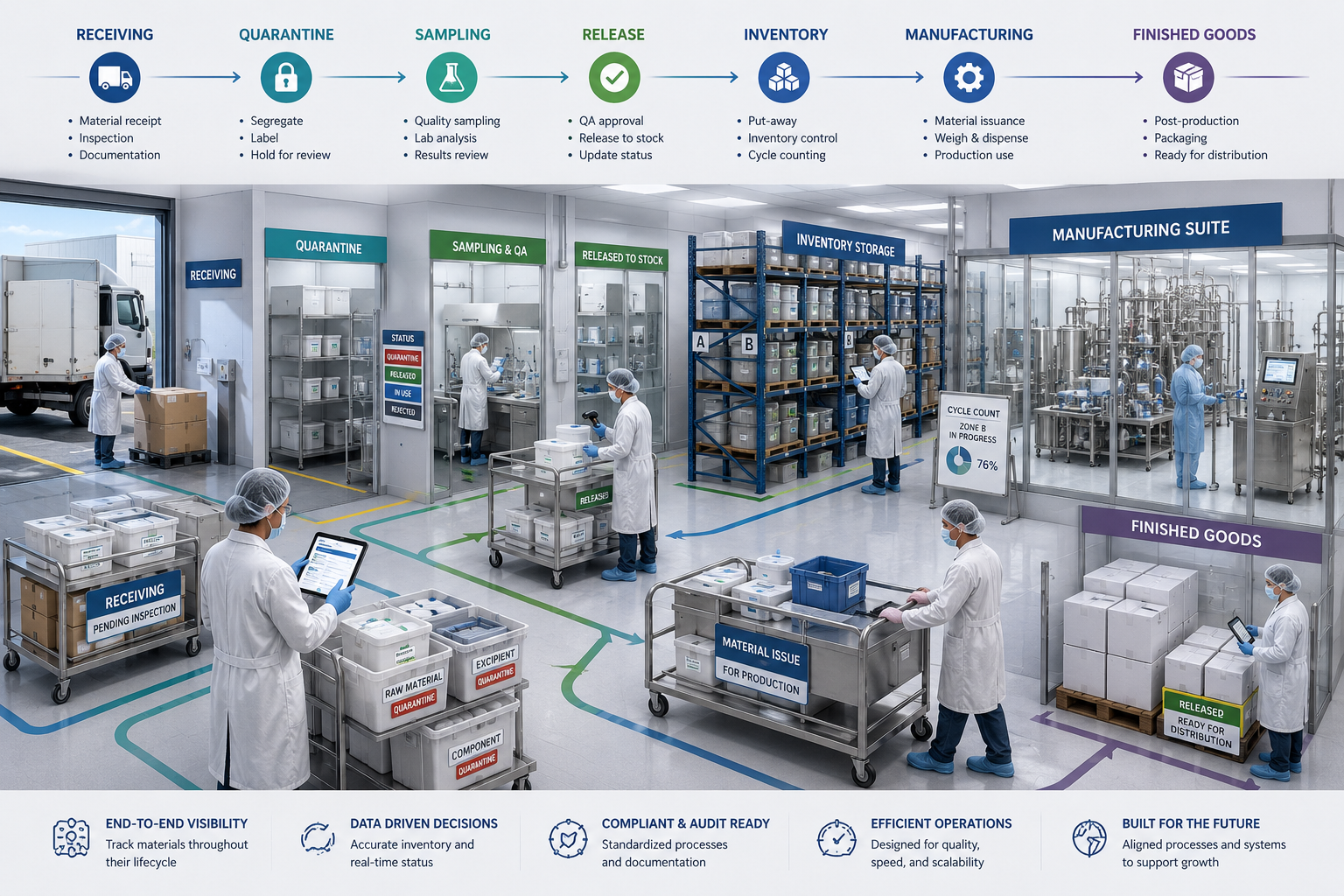
An early-stage biologics company engaged me to help design the operational foundation for its future manufacturing organization as it prepared to transition production from an overseas contract manufacturer to an internal manufacturing site. Leading the supply chain and materials management workstream, I designed an end-to-end materials management operating model spanning goods receipt through finished goods movement, developed supporting SOPs, established inventory management workflows, defined a future-state supply chain organization, and created a phased operational roadmap that aligned manufacturing readiness with the organization's evolving ERP implementation.
Although the manufacturing program was ultimately discontinued following changes in corporate funding, the engagement produced a comprehensive operational framework that positioned the organization for GMP manufacturing readiness by establishing scalable operational processes, inventory controls, and organizational structures capable of supporting future growth.
Client Snapshot
| Industry | Pharmaceutical / Life Sciences |
| Organization | Early-Stage Biopharmaceutical Company |
| Business Environment | Transitioning from outsourced manufacturing to internal GMP manufacturing while implementing Microsoft Dynamics 365 |
| Role | Supply Chain & Materials Management Lead |
| Engagement | Project-based consulting engagement |
| Primary Focus | Manufacturing readiness, materials management, operational process design, inventory management, operating model design |
The Challenge
As the organization prepared to transition manufacturing from an overseas contract manufacturer to its own GMP production facility, it faced the challenge of building the operational infrastructure required to support commercial manufacturing. While facility construction, equipment qualification, and ERP implementation were progressing, the operational processes needed to manage materials, inventory, and manufacturing workflows had not yet been established.
The organization initiated a broader operational readiness effort to develop these capabilities, with my focus centered on designing the end-to-end materials management operating model needed to support compliant and scalable manufacturing operations.
Key challenges included:
- Designing standardized materials management processes to support the complete lifecycle of materials from receipt through manufacturing consumption and finished goods.
- Defining process ownership and developing SOPs for a manufacturing operation that was still being built.
- Establishing inventory management practices, including cycle counting and inventory control, that could scale with future manufacturing operations.
- Developing practical operational solutions that supported immediate business needs while aligning with the organization's phased implementation of Microsoft Dynamics 365.
- Designing an operating model and organizational framework that clarified functional responsibilities, identified process owners, and highlighted future resource requirements as manufacturing operations expanded.
Approach
As the supply chain and materials management lead, I partnered closely with client leadership and cross-functional project stakeholders to design the operational foundation required to support the organization's transition from outsourced manufacturing to internal GMP manufacturing. Recognizing that manufacturing readiness required more than documented procedures, I developed an integrated materials management operating model that aligned operational processes, organizational responsibilities, inventory management, and future system capabilities.
The engagement began by mapping the complete lifecycle of materials throughout the manufacturing process, establishing standardized workflows before documenting supporting procedures. Working collaboratively with operations, quality, manufacturing, and project leadership, I developed scalable processes that could support both immediate operational needs and the organization's long-term transition to Microsoft Dynamics 365.
As the scope evolved, I expanded the engagement beyond process design by identifying opportunities to strengthen inventory management and accelerate digital readiness. This included developing interim inventory management tools, designing a functional no-code inventory management application, and creating a phased transition path that aligned operational processes with the organization's ERP implementation.
Key responsibilities included:
- Worked with the project team to assess warehouse layout, material flow, storage practices, and inventory placement, establishing a current-state understanding of warehouse operations.
- Identified practical warehouse layout improvements that increased storage capacity using existing racking and infrastructure, eliminating the need for immediate investment in additional warehouse space.
- Developed warehouse utilization reporting by location type, providing leadership with objective visibility into current capacity, storage utilization, and future warehouse requirements.
- Evaluated warehouse storage practices and identified opportunities to establish standardized location types and item slotting based on product characteristics, inventory velocity, and end-use rather than available space or tribal knowledge.
- Collaborated with the site's newly established Operational Excellence function to connect warehouse observations with system data, helping build internal understanding of warehouse utilization, operational analysis, and continuous improvement.
- Identified longer-term opportunities to better align inventory planning, purchasing decisions, and warehouse capacity, recognizing that sustainable warehouse performance depends on upstream operational decisions as well as physical warehouse design.
Results
The engagement established the operational foundation required to support the organization's planned transition to internal GMP manufacturing. Although the manufacturing program was ultimately discontinued following changes in corporate funding, the work produced a comprehensive operating model, documented processes, and digital solutions designed to support commercial manufacturing readiness.
Key outcomes included:
- Designed a complete end-to-end materials management operating model supporting the lifecycle of materials from goods receipt through quarantine, sampling, release, inventory storage, manufacturing consumption, and finished goods movement.
- Developed standardized SOPs and process documentation that established clear operational workflows, defined process ownership, and supported GMP-compliant materials management practices.
- Created an inventory management framework incorporating inventory control, cycle counting, material traceability, and inventory reporting to support scalable manufacturing operations.
Digital Readiness
- Developed interim operational tools and workflows that supported immediate business needs while creating a structured transition path to Microsoft Dynamics 365.
- Designed and built a functional inventory management application using Tulip, complete with supporting documentation and user training materials, positioning the organization for rapid deployment while bridging the transition to Microsoft Dynamics 365.
Organizational Readiness
- Designed a future-state supply chain organization that aligned functional responsibilities with process ownership while identifying future resource requirements needed to support commercial manufacturing.
Executive Perspective
Organizations preparing for commercial manufacturing often focus on facilities, equipment, and technology. While those investments are essential, long-term success depends equally on establishing the operational systems, processes, and organizational structure that support them. Clearly defined processes, inventory controls, organizational responsibilities, and scalable systems enable manufacturing operations to launch efficiently while reducing operational risk.
My approach is to design practical operating models that connect processes, organizational structure, and technology into a cohesive operational framework. Whether preparing for commercial manufacturing, scaling operations, or leading broader business transformation initiatives, I help organizations build practical operational capabilities that meet today's needs while creating a clear path for future growth.